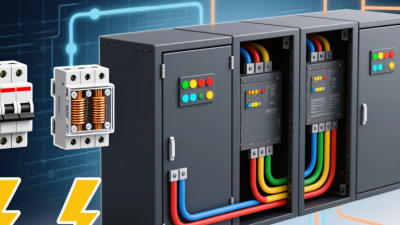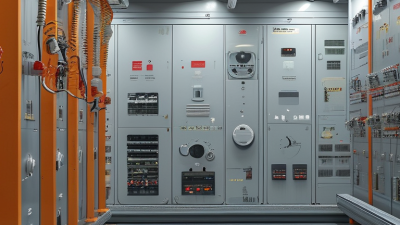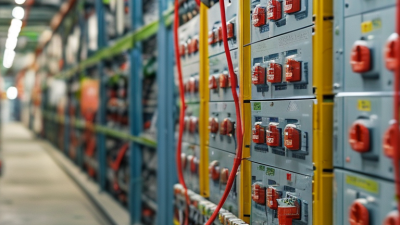
Choosing China’s top modern electrical systems suppliers requires more than comparing catalog prices. A dependable supplier should demonstrate engineering capability, stable production, and clear quality controls. Look for evidence from switchgear factories, automation workshops, and project installations. Detailed product drawings matter. So do test reports.
This guide examines suppliers serving commercial buildings, industrial plants, data centers, and renewable energy projects. It considers low-voltage and medium-voltage systems, power distribution equipment, control panels, energy management platforms, and integrated monitoring solutions. Strong candidates usually explain their design process, component sources, testing procedures, and service coverage. Certifications can support confidence, but they should be verified against the actual product and production site.
Practical experience often reveals more than polished websites. Ask how a supplier handles factory acceptance testing, urgent replacement parts, firmware updates, and installation changes. A supplier may offer impressive technology yet struggle with documentation or local support. That weakness deserves attention. Delivery records, reference projects, and transparent communication provide useful evidence of reliability. Site visits can also reveal cable labeling, panel workmanship, safety procedures, and warehouse discipline.
No ranking remains perfect for every buyer. Project voltage, operating environment, budget, and compliance requirements change the answer. Some suppliers excel at customized control systems but lack international service teams. Others provide strong export experience but limited innovation. Careful comparison helps buyers identify modern electrical systems partners that can perform beyond the quotation stage. That is the real test.
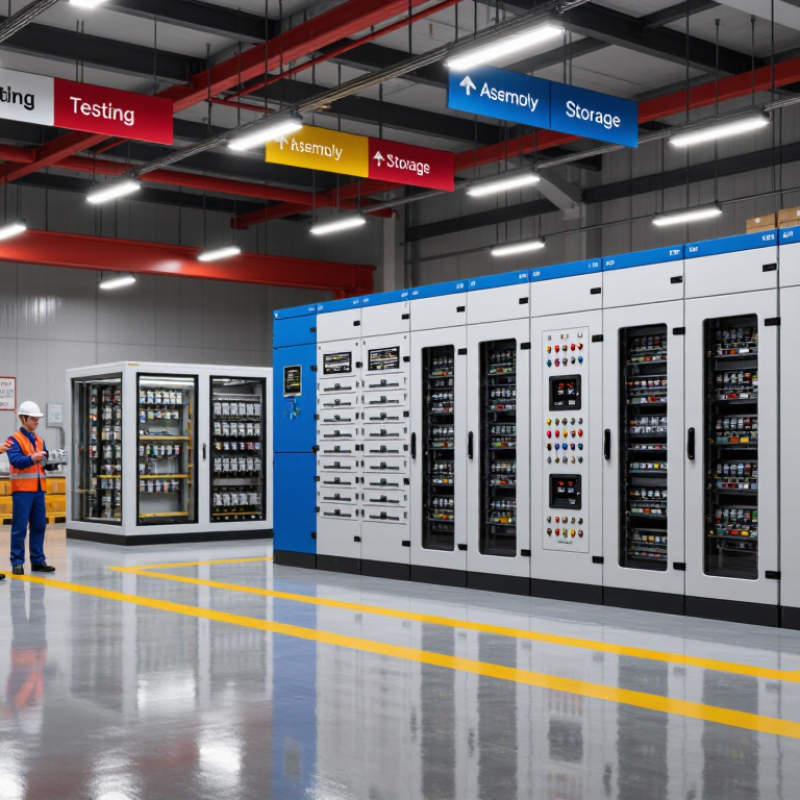
China’s modern electrical system is built across two very different scales. At the transmission level, 1,000-kV ultra-high-voltage lines move large power volumes across long distances.
The National Energy Administration reported China’s total electricity consumption reached about 9.85 trillion kWh in 2024. Installed generating capacity exceeded 3.3 billion kW. These figures increase pressure on suppliers to deliver reliable transformers, gas-insulated switchgear, protection relays, and digital monitoring systems.
The 10-kV network sits closer to daily life. It feeds factories, commercial buildings, rural stations, and dense urban streets. China Electricity Council reports continued investment in distribution-grid upgrades, especially for renewable integration and stronger local reliability.
A capable supplier should show tested short-circuit performance, temperature endurance, and clear maintenance records. Certification alone is not enough. Field performance matters more.
There is a weakness worth admitting. UHV projects often receive precise engineering attention, while smaller 10-kV assets may suffer from uneven inspection quality. A cabinet can pass factory testing yet fail after moisture, dust, or poor cable termination. That detail is easy to underestimate.
Procurement teams should compare lifecycle data, not only purchase prices. The IEA’s Electricity Grids and Secure Energy Transitions report also warns that grid investment must accelerate worldwide before aging infrastructure limits electrification. China’s suppliers therefore need both transmission-scale expertise and practical distribution experience.
China’s modern electrical systems suppliers are best assessed by capability, not catalogue size.
Switchgear makers should demonstrate tested arc resistance, short-circuit performance, and dependable protection coordination. IEC 62271 test records matter, especially for medium-voltage substations exposed to dust, heat, and frequent switching. In practice, cabinet wiring quality can matter as much as the nameplate rating. Small errors create large outages.
Transformers remain the grid’s quiet workhorses. Buyers should examine loss data, insulation systems, temperature-rise tests, and service records under local loading conditions.
The International Energy Agency reported that global electricity demand increased strongly in 2024, with China among the main growth markets. This pressure increases the value of efficient transformers and scalable switchgear. Protection suppliers should provide relay settings, event records, and coordination studies rather than only attractive hardware. Digital functions help, but poor commissioning still causes nuisance trips.
Energy storage is expanding rapidly. The IEA’s Batteries and Secure Energy Transitions report states that battery storage additions in the power sector rose by about 130% in 2023. China’s manufacturing depth supports competitive pricing, containerized systems, and shorter production cycles.
Yet price comparisons can mislead. Check round-trip efficiency, thermal management, degradation guarantees, fire-safety design, and end-of-life procedures. Site acceptance testing is essential. Some procurement teams still overtrust factory certificates, which is a weakness.
Independent inspection, witnessed testing, and transparent warranty terms offer stronger evidence of reliability.
Supplier rankings should remain provisional until equipment performs through a complete operating season.
China’s modern electrical systems market includes six influential supplier profiles. A national grid operator supports transmission planning and large infrastructure projects. A power automation specialist develops dispatch, protection, and digital substation platforms. A high-voltage equipment manufacturer supplies switchgear, breakers, and transmission components. Their products often serve utilities, factories, railways, and renewable energy projects.
Transformer expertise matters. One major supplier focuses on transformers, reactors, and grid integration equipment for demanding load conditions. Two established low-voltage solution providers offer circuit breakers, distribution boards, contactors, meters, and industrial control devices. In practical procurement, buyers should examine rated voltage, short-circuit capacity, temperature rise, enclosure protection, and service response. Factory acceptance tests can reveal wiring errors, unstable relays, or incomplete documentation before shipment.
Details matter most. Ask for test reports, calibration records, warranty terms, and spare-parts policies. Check whether communication protocols match the existing SCADA or energy management system. Site engineers should inspect cable glands, terminal labels, busbar spacing, and grounding points. Testing reveals gaps. Some product data looks complete but lacks installation limits or maintenance intervals. I have seen schedules change because drawings were approved too quickly. Independent verification remains sensible, especially for high-voltage equipment and projects exposed to dust, humidity, or frequent switching. Supplier capability should be judged through audited factories, trained technicians, traceable testing, and references from comparable installations.
China’s top modern electrical systems suppliers should be judged against measurable engineering evidence, not catalogue language.
IEC 61439 requires verified low-voltage assemblies, including temperature-rise, short-circuit, and mechanical performance. A credible factory should show test records, wiring schedules, torque values, and traceable component batches.
Small details matter. Loose terminals still create large failures.
IEC 61850 adds a different benchmark: dependable digital communication between protection, control, and monitoring devices. Engineering teams should verify device configuration, time synchronization, network redundancy, and GOOSE message behavior under fault conditions.
The Uptime Institute Global Data Center Survey 2024 identifies power-related problems as a leading source of serious outages. Therefore, a 99.9% uptime target needs more than a strong switchboard. It requires tested protection logic, maintainable architecture, and documented recovery procedures.
ISO 9001 certification supports process control, but certification alone proves little about field performance. The ISO Survey 2022 recorded more than 1.2 million ISO 9001 certificates worldwide, showing its broad adoption. It does not guarantee perfect workmanship.
Buyers should examine nonconformance records, factory acceptance tests, calibration evidence, and service response data. A practical review may uncover gaps. That is useful. Reliable suppliers leave room for corrective action, because real electrical networks rarely behave exactly like laboratory models.
Evaluating modern electrical system suppliers requires more than comparing prices or polished brochures. Start with rated voltage and insulation coordination. The system must match the network’s operating voltage, altitude, pollution level, and switching conditions. Ask for routine test records and relevant type-test evidence. This reveals whether the design has been verified beyond a sales presentation.
Short-circuit capacity deserves careful attention. Check the rated short-time withstand current, peak withstand current, and interrupting rating. These figures must suit the site’s calculated fault current. A higher number is not automatically better. The protection settings, busbar layout, and upstream equipment must work together. Small details matter.
Efficiency should be measured at realistic loads, not only at ideal conditions. Request loss data at 25%, 50%, and 100% loading. Thermal performance also affects operating cost and service life. Service networks are equally practical. Confirm technician coverage, spare-part locations, remote diagnostics, and documented response times. A nearby support team can reduce downtime. Still, service promises may remain vague. Test them with reference checks and a sample maintenance case. I would also question incomplete data sheets. Site conditions often expose assumptions that factory testing missed.