
801-613-2759 sale@jfitzelectrical.com

Why Are Reefer Unit Parts Important for Global Buyers?

Global buyers depend on refrigerated containers, trucks, and trailers to protect temperature-sensitive cargo across long routes. Behind every stable shipment are critical Reefer Unit Parts, including compressors, evaporator fans, sensors, controllers, belts, filters, and electrical connectors. A small sensor error can trigger an incorrect temperature reading. A worn fan may leave one corner of a container warmer than the rest.

Judith Evans, a respected refrigeration researcher, has expressed a useful cold-chain principle: “The cold chain is only as strong as its weakest link.” Her observation explains why experienced buyers assess more than price. They examine part compatibility, operating history, documentation, service access, and expected performance in different climates. Salt air, dust, vibration, and repeated door openings can expose weak components quickly.

The right parts reduce unexpected downtime and help technicians complete repairs with fewer delays. They can also support more consistent cargo protection, lower energy waste, and better maintenance planning. For global buyers, these benefits affect suppliers, carriers, warehouse teams, and final customers.

Yet, this picture is not perfect. A premium component can still fail when installation is careless. A low-cost part may perform well in one route but struggle in another. Buyers need evidence, not confident promises. Technical specifications, traceable quality records, warranty terms, and practical field experience deserve close attention.

This article explores why Reefer Unit Parts matter in international purchasing. It considers reliability, compatibility, lifecycle cost, and supply continuity. The details may seem small. Their consequences are not.
Why Are Reefer Unit Parts Important for Global Buyers?

What Are Reefer Unit Parts and How Do They Work?

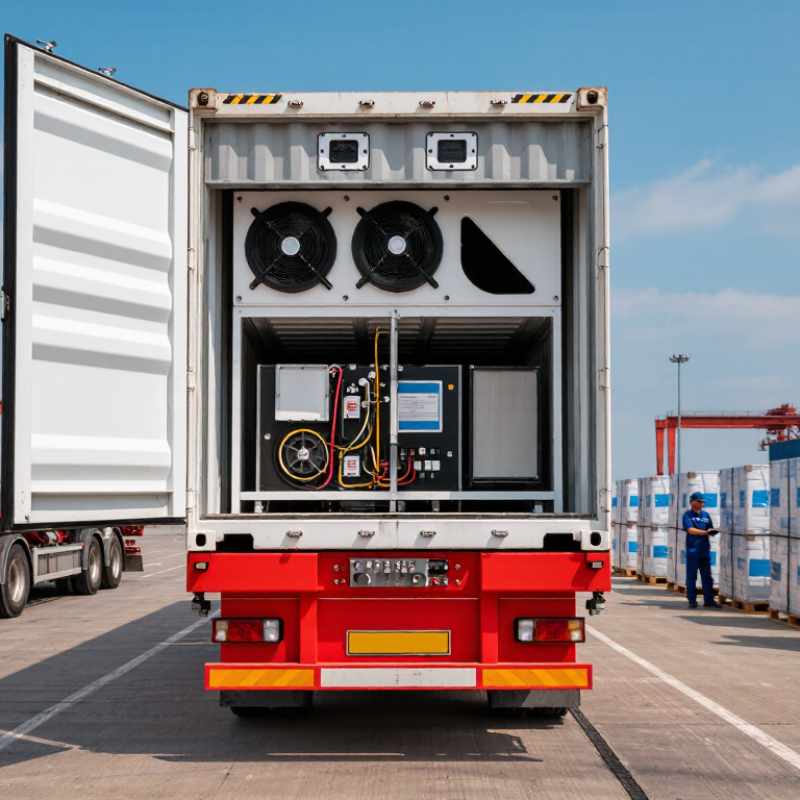
For global buyers, understanding reefer unit parts means understanding how temperature control works inside a refrigerated container. The compressor pressurizes refrigerant and moves it through the cooling circuit. At the condenser, heat leaves the system. The expansion valve then reduces pressure and temperature. Cold refrigerant enters the evaporator, where it absorbs heat from the container air. Fans circulate that cooled air around cartons, pallets, or other temperature-sensitive cargo.

A controller reads sensor signals and adjusts cooling, heating, airflow, and defrost cycles. Sensors measure supply and return-air temperatures. The electrical system powers motors, controls, and safety devices. Door seals and insulation are not active machine parts, but they strongly affect performance. A damaged seal can make a healthy unit run continuously. That detail is often underestimated.

Tips: Match each replacement part with the unit’s model, specifications, and operating conditions. Check connectors, mounting points, voltage, and sensor range before ordering. Ask for test records when possible. Inspect corrosion, worn bearings, cracked wiring, and contaminated coils. In my experience, replacing only a visible component can miss the real fault. A weak fan may result from a motor problem, blocked airflow, or a faulty controller. Good diagnostics take time. Rushing can create repeat repairs and unexpected temperature variation during ocean transport.

Why Are Reefer Unit Parts Essential for Cargo Protection?

For global buyers, reefer unit parts are not minor maintenance items. They protect cargo temperature, airflow, and remaining shelf life during long transit. A worn door gasket can admit warm air. A weak evaporator fan can create cold spots and hidden damage. Small parts matter.

According to the International Institute of Refrigeration’s Informatory Note No. 48 (2019), inadequate refrigeration contributes to losses of about 526 million tonnes of food annually. The FAO’s State of Food and Agriculture 2019 reports that 14% of food is lost between harvest and retail. These figures show why cargo protection begins inside the unit, not at the destination. Reliable temperature sensors, calibrated controllers, clean filters, and sound compressor components help maintain stable conditions. They also support evidence-based inspections when cargo arrives warm.

Experienced buyers should check more than purchase price. Ask for material specifications, compatibility records, test reports, and traceable batch information. A replacement sensor may fit physically but still read inaccurately. That mistake can cause unnecessary cooling or spoilage. It happens. Parts availability also affects response time. A failed fan motor at a remote depot can expose pallets for hours. Keeping critical spares and trained technicians nearby reduces that risk. Still, no component guarantees perfect protection. Loading practices, power quality, calibration, and door-opening frequency remain important.

Which Reefer Unit Parts Affect Cooling Performance?

Why Are Reefer Unit Parts Important for Global Buyers?

Cooling performance depends on several parts working together, not on one powerful component. The compressor creates refrigerant pressure and controls the cooling cycle. If it loses efficiency, box temperature may rise during long routes.

The condenser coil and fan release heat outside the container. Dirt, bent fins, or weak airflow can reduce this heat transfer quickly.

The evaporator coil absorbs heat inside the cargo space. Its fan must distribute cold air evenly, especially around tightly loaded pallets. The expansion valve regulates refrigerant flow into the evaporator. A faulty valve can cause poor cooling, icing, or unstable temperatures.

Sensors and controllers also matter. Incorrect readings may make the system stop too early or run too long. Door gaskets, air filters, wiring, and drain lines seem minor, but they can create real performance problems. In practice, no inspection checklist is perfect.

Tips:

Check part compatibility, electrical ratings, dimensions, and operating temperature ranges before purchase. Ask for test records and installation guidance from qualified technicians. Inspect coils and fans before blaming the compressor. A dirty condenser may look like a major mechanical failure. Replace damaged seals promptly, and keep airflow paths clear around the cargo. Refrigerant-related work requires trained personnel and proper equipment. One overlooked sensor can spoil an otherwise careful repair.

How Do Global Buyers Choose Reliable Reefer Unit Parts?

Global buyers choose reefer unit parts by evidence, not catalog photos. In field maintenance, a failed door gasket can raise energy use and threaten cargo quality. Small errors matter. Buyers should match the part number, unit model, voltage, dimensions, and operating temperature range. They should also confirm refrigerant compatibility and material resistance before ordering. A sensor that fits physically may still send inaccurate readings. That mistake is costly.

Reliable suppliers provide inspection records, batch traceability, clear datasheets, and installation guidance. Ask for test results on compressor performance, fan motor balance, electrical insulation, or sensor accuracy. Independent certification can strengthen confidence, but certificates need verification. A serious supplier explains tolerances and known limits instead of promising perfect service. I prefer suppliers who answer technical questions with drawings, photographs, and measured values. It shows practical knowledge. It also exposes gaps.

Global purchasing adds problems such as customs documentation, different electrical standards, and long delivery routes. Buyers should check packaging, spare-part availability, warranty terms, and response times before payment. A sample inspection is useful when the part is safety-critical or expensive. Do not judge reliability from price alone. I have seen cheaper seals deform quickly in cold conditions. Still, even experienced teams can overlook a specification during urgent repairs. A second-person review can prevent that. Choose parts supported by evidence, compatible data, and accountable communication.

What Factors Influence Reefer Unit Parts’ Cost and Availability?

Why Are Reefer Unit Parts Important for Global Buyers?

What Factors Influence Reefer Unit Parts’ Cost and Availability?

reefer parts protect temperature-sensitive cargo during long, uneven journeys. A failed sensor can spoil a full container within hours. The International Institute of Refrigeration reports that roughly 12% of food is lost because of inadequate refrigeration. This figure shows why dependable components matter.

Cost starts with raw materials. Copper, aluminum, steel, and electronic chips can shift sharply with energy prices and factory disruptions. The World Bank’s Commodity Markets Outlook has repeatedly recorded significant volatility in base-metal prices. Compressor prices also rise when production capacity tightens. Refrigerant rules create another variable. Newer low-impact refrigerants may require different valves, seals, and charging equipment. The part is small. Its supply chain is not.

Availability depends on more than factory output. UNCTAD’s Review of Maritime Transport 2024 recorded strong container-fleet growth after years of disruption, yet equipment positioning remained uneven across trade routes. A buyer in a major port may find a control board quickly. A buyer inland may wait weeks. Local inventories, model compatibility, import lead times, and technician skills all affect the final cost. Used parts can reduce spending, but their remaining service life is often uncertain. That risk deserves honest calculation. Procurement teams should compare failure history, warranty terms, certification, and delivery performance, not only the quoted price. Industry reports offer useful direction, but field records usually reveal the harder truth.