What Is a High Power Electric Motorcycle?
A High Power Electric Motorcycle is more than a battery-powered version of a traditional bike. It combines a high-voltage battery, a powerful electric motor, advanced control software, and reinforced chassis components. Together, these systems deliver immediate torque, strong acceleration, and quiet performance.
Erik Buell, a respected motorcycle engineer and founder of Buell Motorcycle Company, once said, “Electric motorcycles are the future of motorcycling.” His statement captures the industry’s direction, but the reality is more complicated. High power requires careful thermal management. It also increases battery weight, tire wear, and energy consumption.
The numbers matter. A serious High Power Electric Motorcycle may produce over 50 kilowatts, while some premium models exceed 100 kilowatts. Peak output is only one part of the story. Battery capacity, motor efficiency, suspension quality, braking performance, and charging speed influence the complete riding experience.
Range can change dramatically with speed, temperature, rider weight, and terrain. Fast riding drains energy quickly. Public charging remains inconsistent in many regions. That is inconvenient.
Still, the experience can feel remarkably direct. Twist the throttle, and torque arrives without clutch shifting or engine vibration. The bike moves with a clean, forceful surge.
This definition remains imperfect. Some riders value long-distance comfort more than acceleration. Others prioritize lightweight handling and simple maintenance. Therefore, understanding a High Power Electric Motorcycle requires more than reading horsepower figures. It requires examining performance, practicality, safety, and everyday ownership together.
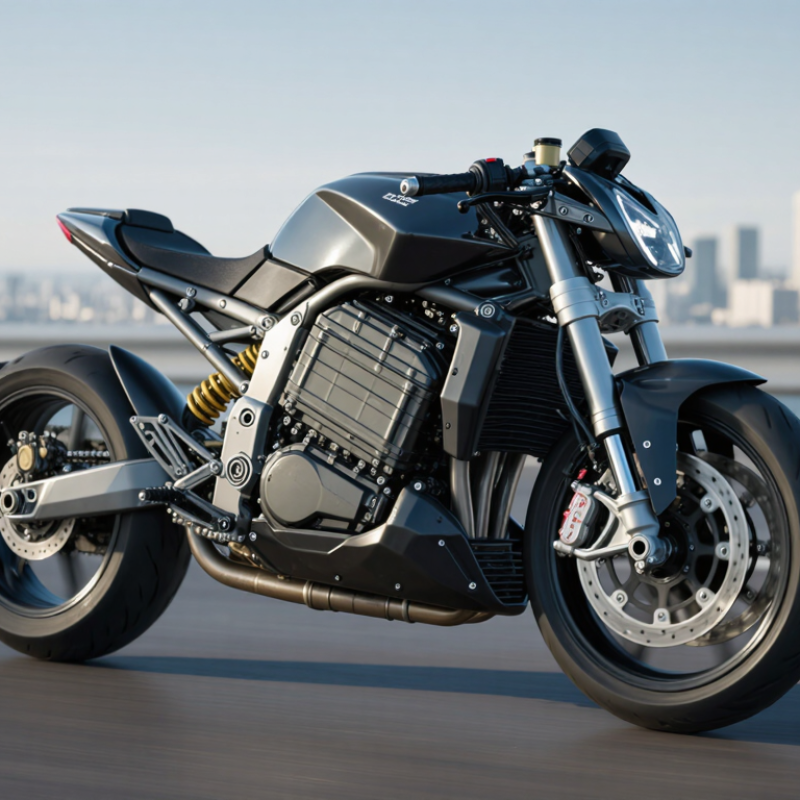
Defining High-Power Electric Motorcycles: The EU L3e-A3 Benchmark Above 35 kW
What Is a High Power Electric Motorcycle?
In the European Union, the clearest benchmark is the L3e-A3 category. It covers high-performance motorcycles with propulsion power above 35 kW, or roughly 47 horsepower. This threshold separates serious electric motorcycles from many urban scooters. L3e-A3 also considers power-to-weight performance, so a lightweight motorcycle can feel dramatically quicker than its figures suggest. The European Commission’s Regulation (EU) No. 168/2013 provides this classification framework.
Power is only part of the experience. A 40 kW motor can deliver instant torque when the rider opens the throttle at a traffic light. Yet battery temperature, software limits, and sustained highway speed can reduce output. The International Energy Agency’s Global EV Outlook 2024 reports that electric two- and three-wheelers are already among the world’s most widely adopted electric vehicles, with more than 130 million in use globally. However, most are low-power models, not L3e-A3 motorcycles. That distinction matters.
Real-world evaluation should include charging time, thermal stability, braking performance, and range at 120 km/h. A large battery may support stronger acceleration, but it also adds mass. In practice, this creates a difficult compromise. The 35 kW threshold is useful, though it does not fully describe ride quality, engineering maturity, or long-distance usability.
What Is a High-Power Electric Motorcycle?
Under the EU L3e performance classification, L3e-A1 motorcycles are limited to 11 kW, while L3e-A2 motorcycles are limited to 35 kW. L3e-A3 identifies high-performance motorcycles above 35 kW. The 35 kW value shown for L3e-A3 represents the entry point, not an upper limit.
Electric Powertrains: 400–800 V Systems, 10–30 kWh Batteries, and Liquid Cooling
What Is a High Power Electric Motorcycle?
A high power electric motorcycle uses a traction system designed for sustained acceleration, high-speed cruising, and repeated thermal loads. Its architecture often operates between 400 and 800 volts. Higher voltage can reduce current for the same output, helping limit cable weight and resistive losses. It does not automatically guarantee better performance.
The battery usually stores 10–30 kWh, depending on range, power demand, and vehicle mass. BloombergNEF reported an average lithium-ion battery pack price of 139 US dollars per kWh in 2023, although motorcycle-grade packs can cost more because of structure, protection, and low-volume production. A 20 kWh pack may deliver strong acceleration, yet aggressive riding can drain it quickly. Range estimates need caution.
Liquid cooling is essential when the motor, inverter, and battery face repeated high loads. Coolant channels can carry heat from cells and power electronics toward a radiator, keeping temperatures within controlled limits. The International Energy Agency’s Global EV Outlook 2024 identifies electric two- and three-wheelers as the largest electrified road-vehicle segment by fleet. That scale supports rapid technical learning, but high-power motorcycles remain more demanding than urban scooters. In practical testing, heat soak often appears after several hard launches, not during one short run. A larger battery is not a complete solution. Poor cooling design can still reduce output, charging speed, and battery life. Industry measurements also deserve scrutiny, because laboratory range rarely matches steep roads, cold weather, or sustained highway riding.
Performance Measurement: 80–150 kW Output, Instant Torque, and Top Speed
What Is a High Power Electric Motorcycle?
A high power electric motorcycle typically produces 80–150 kW at peak output. That figure describes serious performance, not ordinary commuting. On a closed test route, acceleration feels immediate because the motor delivers torque without waiting for gear changes. The front end may lift slightly under hard acceleration. However, peak power is not constant. Battery temperature, charge level, and software limits can reduce output after repeated runs.
Instant torque changes how riders manage speed. A gentle throttle movement can produce a sharp response, especially at low speed. Top speed depends on gearing, aerodynamic resistance, wheel size, and available battery voltage. A powerful motor alone does not guarantee a high terminal speed. Wind noise rises quickly above 200 km/h, while braking distances become much longer. A neat specification can still mislead. Real-world performance requires controlled measurement and honest conditions.
Tips: Compare peak and continuous power separately. Check acceleration times with rider weight included. Ask whether top-speed figures come from independent testing. Watch battery temperature during repeated acceleration. Leave space for error; road surfaces, tire pressure, and weather can change results. Personally, I would value stable performance over one impressive launch. That preference is not universal, but it reflects practical riding experience.
Range and Charging: 100–300 km Riding Range and DC Fast-Charging Capability
What Is a High Power Electric Motorcycle?
A high power electric motorcycle combines strong acceleration with a battery designed for longer road travel. Its practical range may reach 100–300 km per charge, depending on speed, temperature, rider weight, and road conditions. The advertised maximum is measured in controlled settings. Real riding is less predictable.
At 90 km/h, headwinds and repeated acceleration can reduce range sharply. Cold weather also slows battery performance.
A rider should check the battery percentage before leaving, not only the estimated distance. That difference matters.
Maintaining correct tire pressure and using moderate acceleration can preserve several kilometers. Still, I sometimes plan too closely around the display, which can be optimistic near steep hills.
DC fast-charging capability makes longer trips more convenient. When the motorcycle supports a compatible high-current charger, a short stop may add meaningful range within minutes. Charging speed usually decreases after the battery reaches a high percentage, protecting battery health.
Riders should confirm connector compatibility, charging limits, and local electrical requirements before relying on public equipment. A certified charging system and regular battery inspections improve safety and reliability.
The actual charging time varies with battery temperature, charger output, and the motorcycle’s onboard controls.
It is wise to leave a reserve for traffic, detours, and unexpected weather. Range planning is not perfect. It is a moving estimate shaped by both technology and riding habits.