
7 Best Power Reliability Solutions for Global Buyers
Reliable electricity supports every global operation, from a refrigerated warehouse in Rotterdam to a data center in Singapore. Yet voltage dips, unstable grids, and short outages can disrupt production within seconds. The right power reliability solutions protect equipment, preserve data, and reduce costly downtime.
This guide examines seven practical options for international buyers. These include uninterruptible power supplies, standby generators, surge protection, voltage regulation, battery energy storage, microgrid systems, and remote power monitoring. Each solution serves a different operating condition. A UPS can keep control systems running during a brief outage. A generator may support a factory through longer interruptions. Monitoring tools can reveal overheating batteries before failure occurs.
The best choice depends on load size, climate, fuel access, maintenance skills, and local grid performance. Certification requirements also vary between markets. Buyers should review test reports, service coverage, warranty terms, and replacement-part availability. Field experience matters here. A technically impressive system can still disappoint without trained technicians nearby.
Small details matter.
For example, a dusty site may require sealed enclosures and frequent filter checks. A coastal facility may need stronger corrosion protection. Remote locations may benefit from hybrid storage and solar support, but battery recycling and weather limitations require careful planning. No solution is perfect. Cost rankings can also become misleading when downtime risks remain unmeasured. This overview offers a practical starting point, while encouraging buyers to validate each option against real operating data, recognized safety standards, and long-term support capacity.
What Power Reliability Means for Global Buyers
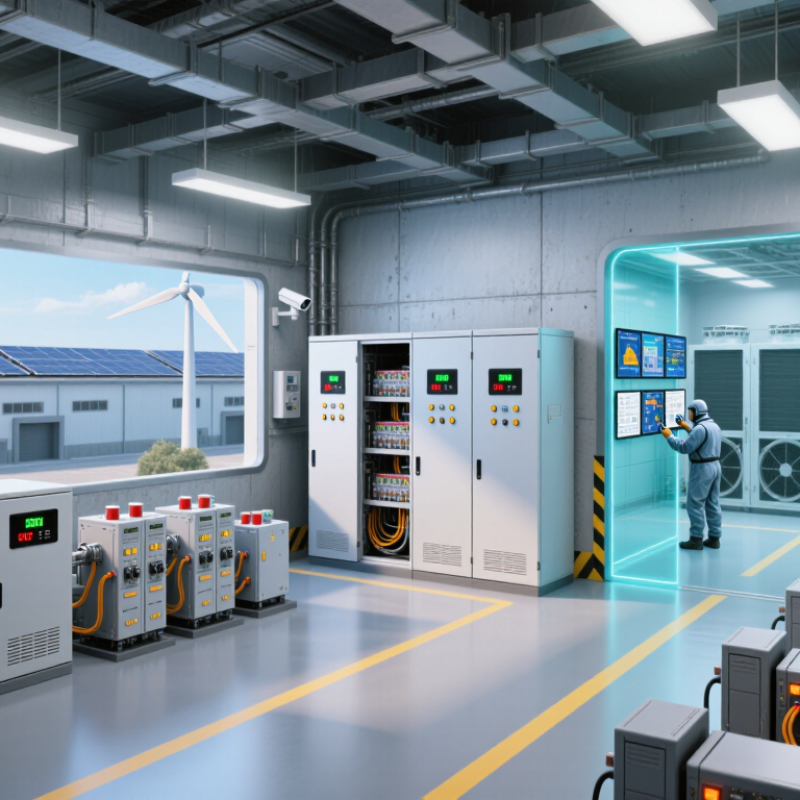
Power reliability means more than keeping equipment switched on. For global buyers, it means stable voltage, predictable uptime, and safe recovery after a disruption. A factory may face storms, weak local grids, customs delays, or limited technical support. Each risk changes the right solution. Practical options include load assessments, uninterruptible power systems, standby generation, surge protection, remote monitoring, redundant equipment, and scheduled maintenance. During commissioning reviews, engineers often find that small wiring issues cause larger interruptions than expected.
Tips: Ask suppliers for measured performance data, not only product claims. Check response times, spare-parts access, service training, and installation requirements in your region. Test equipment under realistic loads, including motors, servers, and sensitive controls. Keep written maintenance records. They reveal patterns.
A reliable design should match local conditions and business priorities. A hospital needs seamless transfer and clear alarms. A warehouse may prioritize refrigeration continuity. A remote site may need fuel planning and simple controls. I have seen buyers overinvest in capacity while ignoring maintenance ownership. That is an expensive gap. Reliability also depends on commissioning, operator practice, and recovery procedures. Ask what happens after the first failure, not only during normal operation. No system is perfect. Even redundant equipment can fail together when monitoring is poorly configured. Global buyers should compare lifecycle cost, technical support, environmental limits, and verified test results before approval.
7 Best Power Reliability Solutions for Global Buyers - What Power Reliability Means for Global Buyers
| Solution | Primary Reliability Challenge | Typical Performance | Best-Fit Applications | Key Buyer Considerations | Relevant Standards or Practices |
|---|---|---|---|---|---|
| Online Double-Conversion UPS | Utility outages, voltage sags, frequency variation, and electrical noise | Continuous power conditioning with zero-transfer-time protection for connected loads; battery runtime commonly ranges from several minutes to more than 30 minutes depending on configuration | Data centers, medical equipment, industrial controls, telecommunications, and other critical loads | Battery chemistry, autonomy time, bypass design, efficiency, maintenance access, and local service capability | IEC 62040 series; appropriate short-circuit, grounding, and battery safety practices |
| Automatic Transfer Switch | Failure of the normal utility source or the need to switch between independent power sources | Typical transfer time is approximately 10–100 milliseconds, depending on design and source synchronization; open-transition systems briefly interrupt the load | Commercial buildings, hospitals, factories, data rooms, and emergency power systems | Source compatibility, switching capacity, neutral-pole arrangement, bypass isolation, and coordination with generators or UPS systems | IEC 60947-6-1; applicable national electrical and emergency-power codes |
| Standby Generator System | Extended utility outages and limited grid availability | Engine-generator sets commonly start and accept load within about 10–15 seconds when properly maintained; fuel storage determines operating duration | Factories, hospitals, infrastructure sites, commercial buildings, and remote facilities | Fuel availability, emissions rules, noise limits, cold-weather starting, load-bank testing, and preventive maintenance | ISO 8528; NFPA 110 where applicable; local emissions and fuel-storage regulations |
| Battery Energy Storage System | Short-duration outages, peak demand, renewable intermittency, and grid instability | Power response can occur in milliseconds; commercial systems commonly provide roughly 1–4 hours of stored energy, subject to system sizing and operating conditions | Microgrids, renewable-energy sites, commercial facilities, and critical infrastructure | Usable energy, power rating, depth of discharge, thermal management, fire protection, degradation, and end-of-life planning | IEC 62933 series; IEC 62619 for industrial lithium batteries; local fire-safety requirements |
| Microgrid with Islanding Capability | Weak grids, remote locations, extreme weather, and dependence on a single utility source | Can disconnect from the utility and operate local generation and storage independently; transition time depends on controls, inverter design, and connected loads | Islands, campuses, industrial parks, rural communities, ports, and emergency facilities | Load prioritization, protection coordination, black-start capability, controls interoperability, fuel strategy, and regulatory approval | IEEE 2030.7 and IEEE 2030.8; applicable interconnection and protection requirements |
| Surge Protection and Lightning Protection | Transient overvoltages caused by lightning, switching events, and utility disturbances | Surge protective devices divert transient current; protection effectiveness depends on clamping voltage, surge-current rating, grounding, bonding, and installation location | Buildings, control cabinets, communication networks, renewable-energy systems, and outdoor equipment | Protection zones, nominal discharge current, maximum continuous operating voltage, residual voltage, and replacement indication | IEC 61643 series; IEC 62305 for lightning protection; correct equipotential bonding practice |
| Power Quality Monitoring and Predictive Maintenance | Undetected voltage deviation, harmonics, equipment overheating, loose connections, and progressive component failure | Continuous measurement can identify events such as voltage interruptions, sags, swells, unbalance, and harmonic distortion; alarm thresholds should be based on equipment sensitivity | Manufacturing plants, data centers, hospitals, utilities, and geographically distributed facilities | Measurement accuracy, sampling rate, communications security, time synchronization, data retention, and integration with maintenance workflows | IEC 61000-4-30 for power-quality measurement methods; IEEE 1159 for monitoring practices |
Typical performance values are indicative and vary with system size, configuration, environmental conditions, installation quality, maintenance, and applicable local regulations.
Related Posts
-
How to Ensure Safe Power Distribution in Global Sourcing?
-

Top 10 Smart Energy Solutions for Global Buyers?
-

Top Renewable Energy Solutions for 2026 to Watch Out For?
-
What Are Energy Efficiency Solutions for Global Buyers?
-

What is the Best Electrical Protection Methods for Global Buyers?
-

Top 10 Weatherproof Electrical Solutions for Global Buyers?