
Choosing among the Top 10 Types of Red Light Therapy Belts to Buy requires more than comparing prices or glowing product photos. A Red Light Therapy Belt may use flexible silicone panels, wraparound bands, dual-sided LEDs, rechargeable batteries, or targeted sections for the waist, back, shoulders, or legs. Each design changes coverage, comfort, portability, and daily convenience.
Real-world use often reveals details that specifications hide. A belt can feel comfortable for five minutes, then press against the ribs during a longer session. Some models remain secure while walking, while others slide over thin clothing. Check the stated wavelengths, irradiance, treatment area, timer, battery life, cleaning instructions, and warranty. Independent testing is valuable, although product information is not always complete or consistent.
Evidence for red light therapy continues to develop. Results may vary with device quality, treatment consistency, skin type, and the concern being addressed. More LEDs do not automatically mean better performance. That assumption deserves caution. This guide compares ten practical belt styles through an evidence-aware, user-focused lens. It considers construction, comfort, safety features, expected maintenance, and realistic buying priorities. Readers should follow manufacturer instructions and seek professional medical advice for persistent pain, pregnancy-related concerns, photosensitivity, or conditions requiring clinical care. No belt should replace diagnosis or established treatment. The best choice is usually the one a person can use correctly, comfortably, and consistently. That sounds obvious, but it is often overlooked.
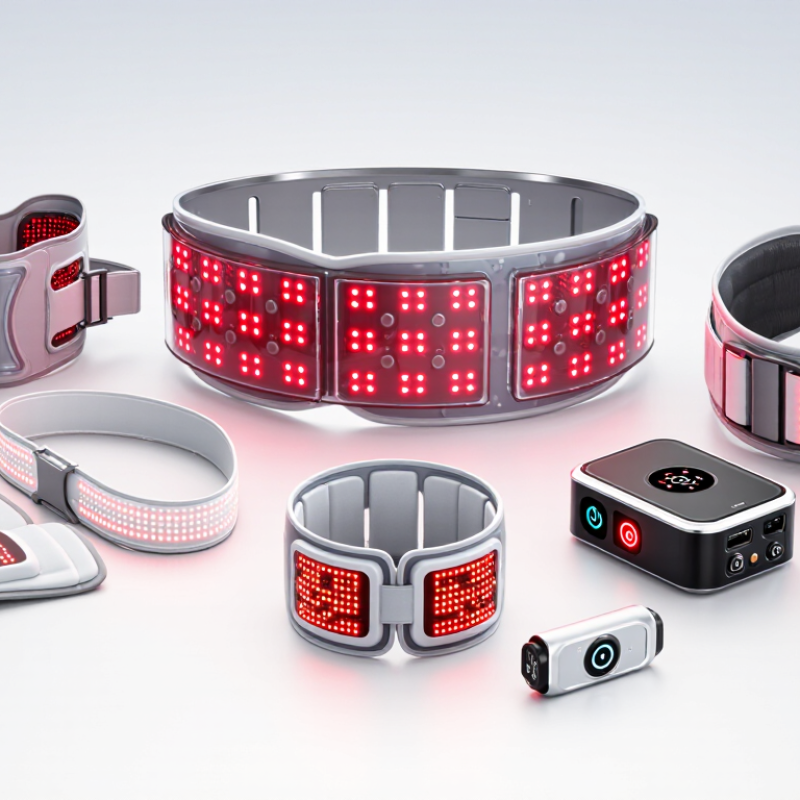
Red light therapy belts are flexible wearable devices lined with light-emitting diodes. They usually deliver red light, near-infrared light, or both. Red wavelengths mainly reach superficial skin layers, while near-infrared wavelengths may travel deeper into soft tissue. The belt wraps around areas such as the waist, back, shoulder, or knee. During a session, the LEDs shine steadily against clean, dry skin. It may feel mildly warm, but heat is not the main purpose.
This process is commonly called photobiomodulation. Light energy may interact with cellular structures and influence energy production, circulation, or inflammatory signals. Research findings remain mixed, and results can depend on wavelength, dosage, treatment time, and the condition being addressed. More light is not automatically better. That assumption needs questioning.
In practical use, a belt should sit evenly without pressing painfully. A loose fit can leave unevenly treated areas. Follow the device instructions instead of extending sessions casually. People with light sensitivity, certain medical conditions, or prescribed photosensitizing medicines should ask a qualified healthcare professional before use. Eye protection may also matter, depending on the design and treatment area. These belts can support a broader care plan, but they should not replace diagnosis or proven treatment. The evidence is promising, not perfect.
The top 10 types of red light therapy belts differ by coverage, flexibility, and intended use. Wraparound belts spread light across the abdomen and lower back. Waist belts usually offer adjustable straps and hands-free sessions. Back belts use longer panels for broader coverage. Shoulder belts follow the upper torso, although their fit can feel awkward. Knee belts are smaller and easier to position around one joint. Arm belts suit elbows and forearms. Leg belts cover larger muscle areas and often need stronger fastening. Full-length belts treat several zones, but they may feel heavy. Flexible silicone belts bend closely against the skin. Rigid panel belts hold their shape and may provide more consistent spacing.
Some models combine red and near-infrared wavelengths. This sounds impressive, but wavelength numbers alone do not prove better results. Check irradiance, treatment distance, timer settings, and published safety information. A removable battery can improve portability, while a corded design may deliver steadier sessions. Look for soft edges and washable surfaces. Sweat changes comfort quickly. No belt fits every body.
Reliable guidance matters more than dramatic claims. Evidence for light therapy varies by condition, device quality, and treatment schedule. Avoid products promising instant healing or guaranteed weight loss. Protect your eyes when instructions require it, and stop if your skin becomes painful or unusually irritated. People using photosensitizing medicine, or managing a significant medical condition, should ask a qualified clinician before use. I would not choose the brightest belt automatically; excessive intensity may reduce comfort and encourage inconsistent use. A simple timer, accurate instructions, and a secure fit often matter more.
| Rank | Belt Type | Typical Light Configuration | Coverage Area | Typical Construction | Typical Session Range | Best Suited For | Important Buying Considerations |
|---|---|---|---|---|---|---|---|
| 1 | Dual-Wavelength Red and Near-Infrared BeltMost versatile | Visible red light, commonly about red 630–660 nm, combined with near-infrared light, commonly about 810–850 nm. | Usually covers the abdomen, lower back, hips, or thighs depending on belt length. | Flexible fabric or silicone panel with LEDs arranged in multiple rows. | Often 10–20 minutes per treatment area, according to the device instructions. | Users seeking one belt for general skin and muscle-area use. | Check whether both wavelength ranges are independently controlled and whether the belt sits evenly against the body. |
| 2 | Red-Light-Only Belt | Primarily visible red light in the approximately 630–660 nm range. | Usually focused on the surface of the abdomen, waist, arms, or legs. | Lightweight textile, neoprene, or flexible polymer body. | Commonly 10–15 minutes per area, depending on irradiance and instructions. | Users mainly interested in surface-level light exposure and a simpler setup. | Confirm the actual wavelength and irradiance; red light is visible, while near-infrared light is not. |
| 3 | Near-Infrared-Focused Belt | Near-infrared LEDs, often within the 810–850 nm range, sometimes paired with a smaller red-light output. | Commonly designed for the lower back, waist, shoulders, or larger muscle groups. | Flexible wrap with a rechargeable controller or wired power module. | Typically 10–20 minutes per area, based on the manufacturer’s recommended dose. | Users who prefer a less visibly bright device for deeper-positioned body areas. | Near-infrared light cannot be judged by visible brightness; look for measured irradiance and thermal controls. |
| 4 | Wide-Wrap Abdominal Belt | Usually red and near-infrared LEDs distributed across a broad central panel. | Designed to cover much of the abdomen and sides of the waist. | Wide, adjustable hook-and-loop fastening system with a flexible LED panel. | Often 10–20 minutes per session. | Users who want broad front-of-body coverage without holding a handheld device. | Measure waist compatibility, check panel flexibility, and confirm that the belt remains comfortable while seated or standing. |
| 5 | Lower-Back Support Wrap | Frequently uses a combination of red light around 630–660 nm and near-infrared light around 810–850 nm. | Concentrated across the lumbar region and sometimes extending around the waist. | Contoured wrap with elastic straps, fastening tabs, or light compression. | Usually 10–15 minutes per session, unless the instructions specify otherwise. | Users who prioritize a close-fitting wrap for the lower-back area. | Do not confuse light therapy with orthopedic support; evaluate heat, pressure, mobility, and fit separately. |
| 6 | Flexible Silicone LED Belt | Often available in red-only or dual-wavelength configurations. | Can conform to curved areas such as the waist, knee, shoulder, or thigh. | Soft silicone or rubberized panel designed to bend around body contours. | Commonly 10–20 minutes per treatment area. | Users who value close skin contact and a flexible fit. | Inspect the bend radius, cable strain relief, cleaning instructions, and whether the material becomes hot during use. |
| 7 | Rechargeable Cordless Belt | May contain red LEDs, near-infrared LEDs, or both, depending on the model. | Typically covers the waist, abdomen, lower back, or a single limb. | Battery-powered controller attached to a fabric, silicone, or neoprene wrap. | Usually 10–20 minutes per session, with battery life varying by power setting. | Users who want to move around during a treatment session. | Compare battery capacity, charging time, controller weight, automatic shutoff, and whether the belt can operate while charging. |
| 8 | Targeted Joint or Limb Wrap | Commonly uses red and near-infrared LEDs in a narrow, curved panel. | Designed for a knee, elbow, wrist, ankle, shoulder, or other smaller area. | Narrow adjustable strap or wrap with a compact LED array. | Often 10–15 minutes per area. | Users who need more focused coverage than a full-size abdominal belt provides. | Check the usable illuminated area, strap length, joint flexibility, and whether the LEDs maintain contact during movement. |
| 9 | Compression-Style Light Therapy Belt | Usually combines red and near-infrared LEDs with a snug elastic or neoprene wrap. | Commonly covers the waist, abdomen, thigh, or lower back. | Elastic compression material with integrated LED modules and adjustable closures. | Typically 10–15 minutes per session. | Users who prefer a close-fitting design that stays in place. | Compression can affect comfort independently of light output; avoid excessive tightness and follow the product’s safety guidance. |
| 10 | Large-Area Multi-Panel Belt | Multiple LED panels, often combining red light around 630–660 nm with near-infrared light around 810–850 nm. | May wrap around the front and sides of the torso or cover several adjacent body zones. | Segmented panels connected by flexible seams, straps, or overlapping sections. | Commonly 10–20 minutes per session, with treatment time depending on the covered area. | Users who want maximum coverage from a wearable belt format. | Review total weight, heat distribution, power requirements, cleaning method, and whether all panels provide consistent output. |
Note: Wavelengths, irradiance, treatment times, coverage, and battery performance vary by device. Use the manufacturer’s instructions, avoid staring directly at LEDs, and consult a healthcare professional if you have a photosensitive condition or use photosensitizing medication.
When comparing therapy belts, start with wavelength and measured irradiance, not attractive packaging. Many devices use red light around 630–660 nanometers and near-infrared light around 810–850 nanometers. Ask whether the seller provides independent testing for output, distance, and treatment time. Numbers without testing can mislead.
The ten common belt styles include flexible wraps, rigid panel belts, rechargeable belts, wired belts, red-only belts, near-infrared belts, dual-wavelength belts, targeted waist belts, full-back belts, and adjustable modular belts. Fit matters. A belt should rest evenly against your body without pinching, sliding, or leaving large gaps. Check its coverage area, strap length, weight, and heat during a ten-minute session. Measure carefully. A powerful device may still be inconvenient if charging takes hours or the controller feels confusing.
Look for automatic shutoff, clear instructions, eye-safety guidance, washable surfaces, and secure cable connections. A timer is useful when fatigue affects your attention. Check whether the battery can be replaced, because sealed batteries may shorten the product’s practical life. I would also compare return policies and warranty terms before trusting impressive claims. Evidence for light therapy varies by condition, dose, and person, so avoid promises of guaranteed pain relief or rapid healing. That detail matters. People with photosensitive conditions or medication concerns should ask a qualified healthcare professional before use. Even careful comparisons have limits; laboratory output may not match everyday performance on a moving body.
Choosing the right red light therapy belt starts with your health goal. A flexible wrap may suit a sore knee, shoulder, or lower back. A wider belt can cover the abdomen or hips. Segmented designs may provide more even contact across curved areas. Some models use red light, near-infrared light, or both. Near-infrared light reaches deeper tissues, but results can vary. Research supports possible benefits for temporary pain relief and skin support, yet it is not a cure. I would not treat impressive before-and-after photos as proof.
Tips: Check the treatment area, wavelength range, session time, battery life, and return policy. Look for clear safety instructions and independent testing information. A belt should feel warm, not painfully hot. Avoid sleeping while wearing it. Protect your eyes when the instructions require it. If you have a light-sensitive condition, take photosensitizing medicine, or use an implanted medical device, ask a qualified clinician first.
Comfort matters more than flashy settings. Measure the target area before buying. A narrow joint belt may slip around a larger waist. A full-torso belt may feel restrictive during daily movement. Start with shorter sessions and track changes in pain, stiffness, or skin comfort. Results may be subtle. They may also fail to appear. Stop if you notice burning, rash, dizziness, or worsening symptoms. More light is not automatically better.
Top 10 Types of Red Light Therapy Belts to Buy?
Safety matters more than belt design. Choose a device with clear wavelength information and adjustable intensity. Look for secure straps, even light coverage, and comfortable materials. Avoid using a belt on broken, infected, or freshly irritated skin. Keep it away from water and damaged cables. Eye protection may be sensible when light reaches the face or upper chest.
Read the supplied instructions before the first session. Start with a short exposure and low intensity, especially if your skin reacts easily. Keep the belt snug, not tight. Heat, itching, swelling, or persistent redness means you should stop. Ask a qualified clinician before use if you take photosensitizing medicine or have a light-sensitive condition. Evidence differs among devices, so stronger light is not automatically better. I used to assume brighter meant faster results. That assumption needs questioning.
Clean the belt after each session with a soft, slightly damp cloth. Do not soak it or spray liquid into the controls. Let the surface dry fully before storage. Check the fabric, fasteners, and power connection every few uses. A loose cable can create inconsistent sessions or a safety concern. Store the belt flat in a cool, dry place, away from direct sunlight. Keep a simple log of session length, skin response, and comfort. This makes vague impressions more useful, although it cannot replace professional advice. Expect gradual changes, not dramatic overnight effects.