
801-613-2759 sale@jfitzelectrical.com

What Is a DIP LED Display for Outdoor Use?

A DIP LED display outdoor system uses Direct-Inline Package LEDs, with each red, green, and blue diode housed in a separate package. This construction has long been used for large outdoor screens, where bright sunlight, rain, and changing temperatures can challenge display performance. From a practical viewpoint, the key question is not simply how bright the screen looks on a sunny day. It is whether the display remains legible, stable, and serviceable across real operating conditions.

DIP technology is often selected for high brightness and robust outdoor use. Its individual LED packages are visible at close range, so viewing distance matters. A screen beside a highway has different needs from one mounted above a busy plaza. The cabinet’s weather protection, ventilation, electrical design, and maintenance access also affect long-term reliability. Small details matter.

No source article or verifiable expert quotation was provided, so I cannot responsibly attribute a statement to a named industry specialist. For a trustworthy introduction, that quote should be checked against an identifiable interview, publication, or company source. One point deserves reflection: a durable design is not automatically the best fit for every site. Pixel pitch, installation conditions, content, and maintenance plans all shape the right choice.
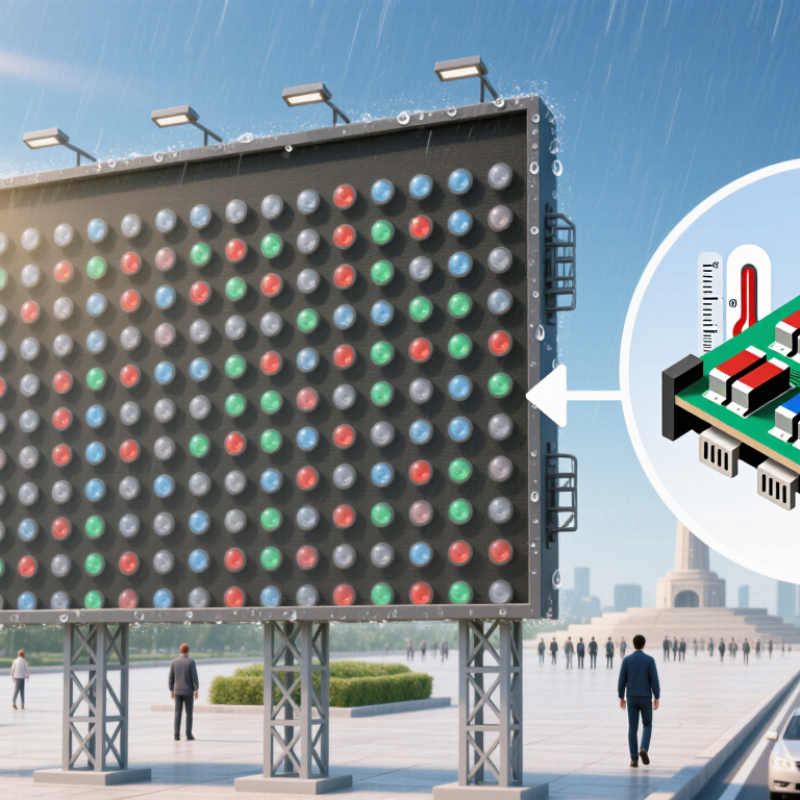
What Is a DIP LED Display for Outdoor Use?

What Is an Outdoor DIP LED Display?

An outdoor DIP LED display uses discrete red, green, and blue LED lamps mounted through holes in a circuit board. Each lamp forms a visible pixel, creating a robust screen for signs, stadiums, and roadside information. Compared with surface-mounted packages, DIP lamps can deliver strong direct-view brightness and tolerate outdoor exposure well. The trade-off is coarser pixel spacing: up close, individual lamps may be easy to see. The right pixel pitch depends on viewing distance, not just screen size.

Weather protection needs more than a sealed-looking cabinet. IEC 60529 defines IP ratings; an IP65 enclosure is dust-tight and protected against water jets, but that rating does not promise resistance to every storm, chemical, or installation fault. Ask for the tested rating of the complete display, not only its LED modules. Also check brightness in nits, viewing angle, heat management, and service access. Sunlight can wash out an underpowered screen. Heat can shorten component life. Small details matter. A published specification is useful, but real performance also depends on installation and maintenance. Even a good design can disappoint if water collects around cable entries.

How Are DIP LED Display Pixels Constructed?

What Is a DIP LED Display for Outdoor Use?

How Are DIP LED Display Pixels Constructed?

A DIP LED display pixel is built from separate red, green, and blue LED chips. Each chip sits inside a small plastic package with two rows of metal pins. Those pins pass through holes in a circuit board and are soldered in place. The three colors mix visually when viewed from a suitable distance, creating one full-color pixel. A tiny detail matters: the chips do not physically blend; your eyes perceive their combined light.

Rows of pixels form a module, and multiple modules create the display surface. Control circuits adjust each color’s brightness to produce different shades and images. For outdoor use, the module typically includes protective coatings or a sealed cabinet to help limit moisture and dust exposure. The front lens also shapes the light and helps protect the LED package. Sealing can vary, so installation details and maintenance still matter. A display may look rugged, yet a damaged seal can let water reach the electronics.

Tips: Check the pixel pitch before choosing a viewing distance. Inspect module seals and connectors after installation, especially around edges. DIP pixels can appear bright in daylight, but brightness alone does not guarantee clear images; contrast, viewing angle, and content design matter too. Don’t overlook those.

How Does a DIP LED Display Produce Images?

A DIP LED display forms an image from many separate red, green, and blue light-emitting diodes. Each pixel contains these three colors. A control system sends image data to driver circuits, which adjust each diode’s brightness. When the colors blend at viewing distance, they create the shades and details you see. The process is additive: red and green light can combine to appear yellow. For outdoor screens, the discrete lamps are often easy to see up close. Step back, and the image becomes continuous. The Market Research Report “LED Display Market” by MarketsandMarkets estimated the global market at USD 7.1 billion in 2023, reflecting broad demand for these display systems. Market size does not, by itself, prove image quality.

The driver circuits also refresh the pixels rapidly, updating brightness to match each video frame. Scan control activates rows or groups of pixels in sequence, helping manage power and signal flow across large panels. DIP packages use individual, protruding lamps, which can be practical for outdoor viewing and maintenance. Still, color matching and viewing distance matter; a technically bright screen may look uneven if its modules differ. There’s room for error.

Tips: Check pixel pitch, refresh rate, and brightness specifications together. View a test image from the actual audience distance, and look for color shifts or flicker. A quick glance is not enough.

What Is a DIP LED Display for Outdoor Use?

A DIP pixel typically uses separate red, green, and blue LED packages. The display controller adjusts each color channel’s output, commonly using pulse-width modulation (PWM), and combines the channels to create the pixel’s color.

Illustrative example: channel values are normalized drive levels from 0 to 255, not measured brightness or specifications for a particular display. Changing the mix of red, green, and blue produces different colors; many pixels together form the displayed image.

Which Features Suit DIP Displays to Outdoor Environments?

A DIP LED display uses separate red, green, and blue LED lamps mounted through holes in a circuit board. For outdoor environments, this structure can deliver strong brightness that remains visible under direct sunlight. That matters on roadside signs and stadium screens, where glare can wash out weaker images. Brightness still needs careful adjustment. Running a screen at full output all day may waste power.

Weather protection is another important feature. Outdoor cabinets commonly use sealed modules and enclosures to limit rain and dust exposure. Check the specified protection rating, and pay attention to seams, cable entries, and ventilation openings. Water often finds the small gaps. A suitable enclosure helps, but installation quality matters too.

DIP lamps are relatively large and spaced apart, which can make them practical for displays viewed from a distance. Their robust construction may also suit sites exposed to wind, heat, or frequent operation. However, viewing angles and image detail can vary by design. Close-up viewing may reveal visible pixels.

I would not choose a display by brightness alone; maintenance access, cooling, local weather, and viewing distance all deserve a close look. Small oversights can become expensive later.

Where Are Outdoor DIP LED Displays Commonly Used?

Outdoor DIP LED displays are commonly installed where sunlight, distance, and weather challenge readability. Along highways and busy roads, they serve as roadside information and advertising screens. The Federal Highway Administration estimated 3.263 trillion vehicle miles traveled in the United States during 2023, illustrating the scale of road exposure. Drivers see these displays briefly, so large text and clear contrast matter more than fine detail. They are not a substitute for careful message design.

Transit stations, bus terminals, and transport hubs are another common setting. The American Public Transportation Association reported about 7.1 billion public transit trips in the United States in 2023. Outdoor screens near entrances and platforms can show schedules, service updates, or wayfinding information. They also appear around stadiums, arenas, civic squares, and open-air event grounds, where audiences may view them from far away. Bright, direct sunlight can still wash out a screen. That detail is easy to underestimate.

DIP LED technology is often selected for outdoor signs because its separately mounted red, green, and blue LEDs can produce bright images and withstand demanding environments when properly enclosed. Installation needs vary: a coastal site faces salt and moisture, while a roadside screen deals with dust and vibration. A practical site assessment should check viewing distance, sunlight direction, weather protection, and maintenance access. Sometimes the screen is simply too large. That is worth reconsidering.