
Best Vitavon Racing Development Products in 2026
In 2026, choosing Vitavon Racing Development products is about more than adding polished metal parts to an RC vehicle. The right upgrade should address a real need: sharper steering response, stronger suspension components, or better protection around exposed hardware. Henry Petroski, an engineer and design author, offers a useful reminder: “Science is about knowing; engineering is about doing.” That idea fits performance upgrades. A component must work on the vehicle, not just look impressive on a workbench.
This guide examines Vitavon Racing Development products through practical details: material, fit, intended use, and the demands of your driving surface. Think about a landing that loads the suspension, or a stone that strikes a lower arm. Those moments reveal more than a product photo can. Compatibility matters, too. Check your model, version, and installation requirements before ordering; small differences can turn a promising upgrade into a frustrating fit. No part fixes every weakness. And more aluminum is not always better. Added rigidity may protect one area while shifting stress elsewhere, a trade-off worth considering. The strongest choice is the one that suits your setup, your maintenance habits, and the way you actually drive. Some decisions are still imperfect. Keep that in mind as you compare the products ahead.
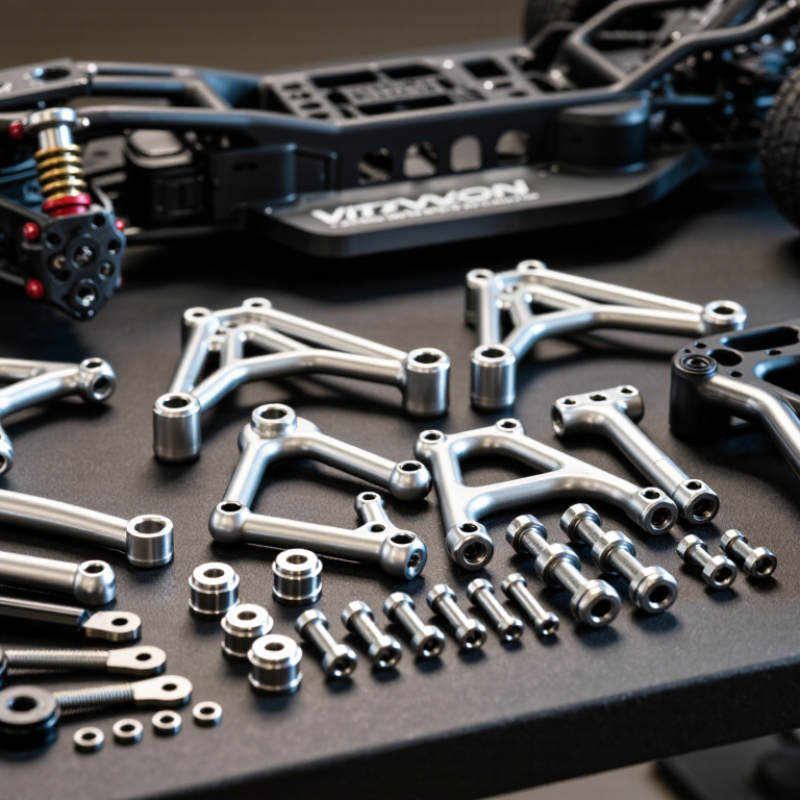
Understanding Vitavon Racing Development and Its Product Range
Racing development is not just about adding bright metal parts. It means refining a vehicle’s response, durability, and consistency under repeated use. A product range may include suspension arms, steering links, wheel hubs, chassis braces, and drivetrain components. Each part affects a different area. A stiffer arm can sharpen steering, but it may also transfer more impact to nearby components. Small changes matter.
Fit comes first. Check the vehicle’s model, mounting points, and clearances before choosing an upgrade. Then inspect material, machining, fasteners, and replacement-part availability. On the workbench, compare each new part with the original: note its weight, joint movement, and hole alignment. Test one change at a time on a familiar course, and record handling or wear. That makes cause and effect easier to judge. Looks can mislead. I’ve seen upgrades chosen for appearance before checking fit; that is an easy mistake to repeat. A useful development part should solve a clear problem, not merely add complexity. Always verify specifications with current product documentation, since versions and compatibility can change.
Best Racing Development Products in 2026 — Understanding Racing Development and Its Product Range
| Product category | Common materials or design | Primary function | Potential benefit | Selection considerations |
|---|---|---|---|---|
| Chassis plates | Machined aluminum or molded composite, depending on vehicle design | Support the drivetrain, suspension, and electronics | A replacement or setup change can affect stiffness, weight, and serviceability | Check vehicle generation, wheelbase, mounting points, and intended surface |
| Suspension arms | Usually molded engineering plastic; some designs use metal components | Connect the wheels to the suspension and allow controlled movement | Replacement arms restore function after wear or impact; geometry influences handling | Confirm left/right position, front/rear fitment, and suspension geometry |
| Steering knuckles and hubs | Molded polymer or machined metal, with design varying by platform | Locate wheel bearings and support steering or suspension pivots | Can provide a replacement for damaged parts or a different setup option | Verify bearing sizes, axle type, steering linkage, and vehicle compatibility |
| Shock towers | Commonly molded composite or machined aluminum | Provide mounting positions for suspension dampers | Multiple mounting positions can help adjust suspension geometry | Match the tower to the chassis and check hole positions and shock length |
| Steering components | Metal or composite bellcranks, links, and mounting hardware | Transfer servo movement to the front wheels | Well-maintained, correctly adjusted parts help provide consistent steering response | Check servo position, linkage length, steering travel, and included hardware |
| Drivetrain gears and components | Steel, aluminum, or engineering plastic, selected for the component and application | Transmit power from the motor through the vehicle drivetrain | Replacement parts can restore power transfer; gearing changes can alter speed and acceleration | Confirm gear pitch, tooth count, shaft dimensions, and drivetrain layout |
| Wheel hexes and adapters | Metal or composite adapters in platform-specific sizes | Secure wheels to the axle and transfer rotational force | Allow compatible wheel installation or replacement of worn adapters | Check hex width, axle type, pin fit, and wheel offset |
| Bumpers and impact guards | Typically flexible molded plastic or composite material | Help protect the chassis and body during contact | Replaceable guards can help limit damage to more costly components | Confirm mounting pattern, body clearance, and intended vehicle type |
| Body mounts and posts | Molded plastic or metal posts, with adjustable designs available | Hold the body shell in position on the chassis | Replacement or adjustable mounts can help restore fit after damage or body changes | Check post height, mounting locations, and body-shell hole placement |
| Fasteners and hardware kits | Steel or other specified alloys; kits may include screws, nuts, and washers | Join and secure vehicle components | Replacing damaged or missing hardware supports safe assembly and maintenance | Match thread type, length, head style, and quantity to the vehicle manual |
Compatibility, material, and performance depend on the specific vehicle and part design. Check the vehicle manual and product specifications before ordering or installation.