
801-613-2759 sale@jfitzelectrical.com

10 Best Electric Sightseeing Cars for Global Buyers

Choosing the right Electric Sightseeing Car requires more than comparing price tags and glossy photographs. Global buyers must consider passenger capacity, driving range, charging time, terrain, weather, and service support. A vehicle carrying visitors along a flat resort path may struggle on steep streets or uneven park roads. Small details matter. Seat height, handrails, turning radius, and weather protection can shape every passenger’s experience.

This guide presents 10 Best Electric Sightseeing Cars for Global Buyers through a practical, evidence-based lens. It considers published specifications, operating feedback, build quality, battery options, safety equipment, and manufacturer support. Regional requirements also deserve attention, including road classification, lighting standards, accessibility expectations, and local approval procedures. Claims should be verified with suppliers before purchase. Specifications can vary between markets.

Real-world performance matters most.

A quiet motor, stable braking, and dependable charging can improve daily operations. However, no model is perfect. Some vehicles offer impressive range but limited service coverage. Others provide strong comfort while requiring more charging time. That trade-off deserves honest discussion. Buyers should inspect warranty terms, replacement-part availability, and technician training before signing an order. Climate also changes results; heat, cold, hills, and heavy passenger loads can reduce expected range. The following selection is designed to support careful comparison, not replace professional testing or local compliance checks.
10 Best Electric Sightseeing Cars for Global Buyers

What Defines an Electric Sightseeing Car?

An electric sightseeing car is more than a small vehicle with a battery. It is purpose-built for short, frequent passenger trips in public spaces. Its design usually combines low speed, open visibility, easy boarding, and quiet operation. Quiet, not silent. Drivers still need mirrors, warning signals, and clear pedestrian awareness. A stable frame matters when passengers enter, move, or sit unevenly.

The battery and motor should match the route, passenger load, and local weather. A vehicle climbing wet hills needs different performance from one crossing a flat resort. Real-world range can fall with heavy use, cold temperatures, or frequent stops. Range estimates can mislead. Buyers should review tested operating data, charging time, battery protection, and service access. A charging port that is difficult to reach soon becomes an everyday frustration.

Passenger safety also defines the category. Useful features include secure handrails, non-slip flooring, seat belts where appropriate, strong lighting, and an emergency access plan. Weather protection should cover passengers without blocking the driver’s view. Accessibility deserves practical testing, not just a specification sheet. Can a mobility device approach the entrance? Can staff secure it quickly? A perfect design rarely exists, and operators should document these compromises before purchase. Regular inspections, trained drivers, and clear maintenance records support dependable operation over time.

Key Criteria for Comparing Global Sightseeing Vehicles

Choosing among ten electric sightseeing cars requires more than comparing seating numbers. In practical fleet reviews, I examine passenger flow, stopping frequency, terrain, and daily operating hours. A vehicle carrying twelve people may perform poorly on steep paths or uneven paving. Measure twice. Battery capacity should match the route, not just the advertised range. Real range falls with hills, cold weather, heavy loads, and frequent acceleration. Request tested figures under similar conditions, and record charging time beside energy consumption.

Safety deserves documented attention. Check braking performance, lighting, mirrors, seat restraints, handrails, emergency access, and visibility around the vehicle. Confirm that the design meets current requirements in its operating jurisdiction. Local rules may cover passenger capacity, road access, speed limits, and driver licensing. Accessibility also matters: low steps, stable grab points, and room for mobility equipment can improve genuine usability. Ask for maintenance intervals, spare-part availability, battery warranty terms, and technician training. A low purchase price can hide expensive downtime.

For global buyers, climate protection and corrosion resistance should be assessed before shipment. Sealed electrical components, durable upholstery, and effective drainage matter in wet coastal sites. Dust protection becomes important on dry trails. I also compare turning radius, ground clearance, noise levels, and cabin comfort during a full shift. A spreadsheet can still mislead. Visitor behavior changes by season, and operators sometimes underestimate cleaning and charging labor. Pilot testing on the actual route is wiser than trusting a showroom demonstration. Independent inspection records and transparent service documents make comparisons more reliable, even when the perfect vehicle does not exist.

Ten Leading Electric Sightseeing Cars for Different Markets

10 Best Electric Sightseeing Cars for Global Buyers

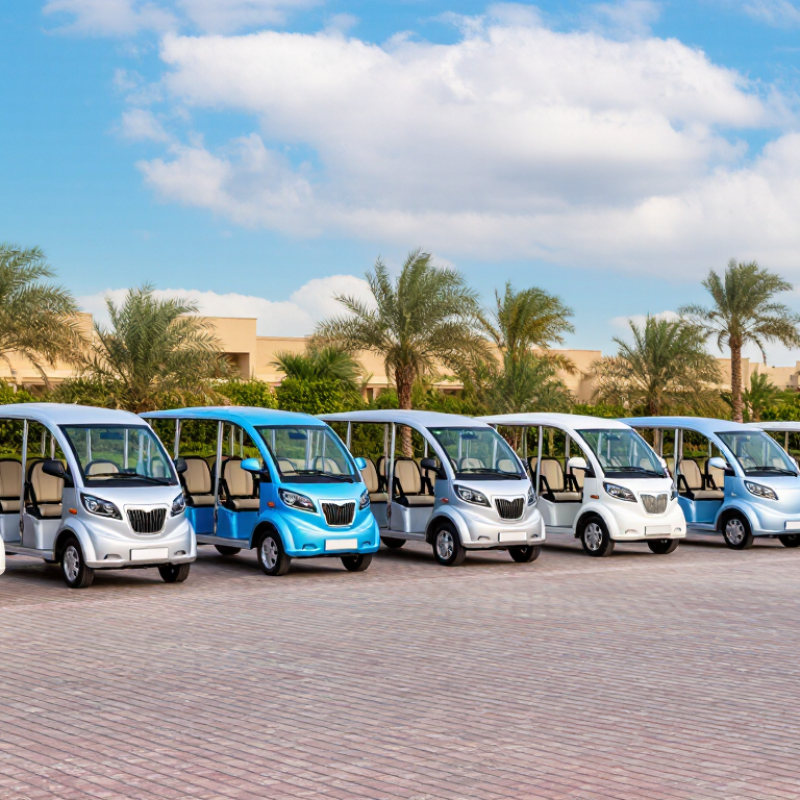
For different markets, the best choice is rarely the fastest vehicle. It is the vehicle that matches passenger flow, climate, terrain, and charging access. The ten leading configurations include an 8-seat open shuttle, 11-seat hotel cart, 14-seat resort vehicle, 17-seat park shuttle, 23-seat tour bus, enclosed four-season car, low-floor accessible car, airport transfer vehicle, beachside utility shuttle, and compact city-tour car. Each serves a different operating scene.

The International Energy Agency reported that global electric car sales exceeded 17 million in 2024. Its Global EV Outlook 2025 also highlights rapid charging-network expansion. This supports electric sightseeing fleets in tourism districts, campuses, airports, and public parks. BloombergNEF reported average lithium-ion battery prices of 115 dollars per kilowatt-hour in 2024, a 20% annual decline. Lower battery costs can improve fleet economics, but maintenance quality still matters.

In hot markets, open sides and strong ventilation are practical. In colder regions, sealed cabins, heating, and larger batteries deserve priority. Steep resorts need high torque and dependable hill control. Narrow historic streets need short wheelbases and tight turning circles. Accessibility should not be an afterthought.

Real-world testing may change the ranking. A vehicle with impressive range can still fail during crowded loading cycles. Buyers should measure route length, passenger turnover, charging time, and rain exposure before ordering. The “best” electric sightseeing car remains a local decision. That is the difficult part.

10 Best Electric Sightseeing Cars for Global Buyers

Ten leading electric sightseeing vehicle configurations for different markets, compared by typical passenger capacity. These seating capacities are commonly used in low-speed electric resort, campus, park, airport, and tourist transport applications.

Smaller 6–8 passenger vehicles are suitable for resorts, hotels, and golf facilities, while 14–23 passenger configurations are better suited to parks, campuses, tourist districts, and large transport hubs.

Essential Features, Specifications, and Safety Considerations

10 Best Electric Sightseeing Cars for Global Buyers: Essential Features, Specifications, and Safety Considerations

Electric sightseeing cars now serve resorts, parks, campuses, and historic districts worldwide. The IEA’s Global EV Outlook 2025 reports that electric car sales exceeded 17 million in 2024, representing more than one-fifth of global car sales. This growth supports better batteries and charging systems, but low-speed passenger vehicles need different priorities.

Check passenger capacity, rated payload, ground clearance, turning radius, and braking performance. A practical vehicle should manage steep paths, wet surfaces, and frequent stop-and-go use. Battery capacity matters, yet usable range is more valuable than brochure range. Request range figures under full passenger loads and realistic temperatures. Lithium battery protection should include thermal monitoring, overcurrent control, secure mounting, and clear emergency procedures. Ask for documented testing against applicable standards, such as ISO 6469 where relevant, and verify local approval requirements.

Safety needs visible details. Look for three-point belts, strong handrails, non-slip flooring, reverse alarms, lighting, mirrors, and speed control. The World Health Organization estimates 1.19 million annual road deaths, reminding operators that low speed does not remove risk.

Tips: inspect charging connectors daily, record battery faults, and train drivers before passenger service. Keep pedestrians in mind.

I still see buyers choosing maximum seating over stability and accessibility. That can be an expensive mistake. A wide step, predictable acceleration, and wheelchair access may matter more than an extra ten kilometres of claimed range. Service support, spare parts, and battery warranty should be checked before purchase. Specifications look perfect on paper. Real routes are less forgiving.

How Global Buyers Can Select the Right Sightseeing Car

Choosing among the 10 best electric sightseeing cars requires more than comparing battery size. Global buyers should begin with route conditions, passenger flow, and local service capacity. A vehicle carrying eight passengers on steep, wet roads needs different torque, braking, and ground clearance from one used on flat resort paths.

The International Energy Agency reported nearly 14 million electric car sales worldwide in 2023, showing stronger charging and maintenance infrastructure. Its Global EV Outlook 2024 also recorded more than four million public charging points by the end of 2023. However, sightseeing vehicles may operate in parks or private attractions, where charging access remains limited. Ask for usable range, charging time, battery warranty, and performance after repeated stop-and-go driving. Numbers on a brochure can disappoint.

Check seating ergonomics carefully. Measure entry height, legroom, luggage space, turning radius, and visibility from the rear row. Confirm whether the battery system suits the destination’s heat, cold, hills, and humidity. Independent inspection matters. So does training.

The Global EV Outlook notes that battery demand continues to expand with electric mobility, but supply chains and material costs remain exposed to market changes. Buyers should therefore compare total ownership cost, not only purchase price. Include tires, brake components, charger installation, software support, and technician response times. I would test a loaded vehicle on the real route before ordering. That step is easy to skip. It should not be. (International Energy Agency, Global EV Outlook 2024)