
2026 Best High Flow Filter Cartridges for Global Buyers
Global buyers entering 2026 face tighter water-quality demands, rising operating costs, and more variable feedwater. High Flow Filter Cartridges are increasingly used in municipal treatment, desalination, food processing, power generation, and industrial reuse. These applications need strong flow, stable pressure loss, and predictable service life. They also need evidence, not attractive brochures.
The WHO/UNICEF Joint Monitoring Programme reported in 2024 that 2.2 billion people lacked safely managed drinking water in 2022. The UN World Water Development Report 2024 also identified agriculture as the largest user of freshwater worldwide. These figures explain the pressure on treatment plants to recover more water with fewer interruptions. A cartridge handling 70 to 100 gallons per minute can reduce vessel count, floor space, and replacement labor. Performance still depends on the details.
Micron ratings can mislead.
This guide compares leading High Flow Filter Cartridges for global buyers in 2026. It considers nominal and absolute ratings, dirt-holding capacity, pressure drop, media construction, seals, and chemical compatibility. Testing aligned with ISO 16889 can make capacity claims more meaningful, although laboratory results do not perfectly represent every plant. Temperature, suspended solids, oils, and cleaning practices can change real performance quickly.
We also examine supplier traceability, batch documentation, regulatory support, and regional availability. A low purchase price may become expensive after frequent shutdowns. That lesson is easy to overlook. No cartridge is best for every process, and even experienced teams can select poorly when they compare flow rates alone. The following evaluation aims to support practical, evidence-based purchasing decisions across different industries and operating environments.
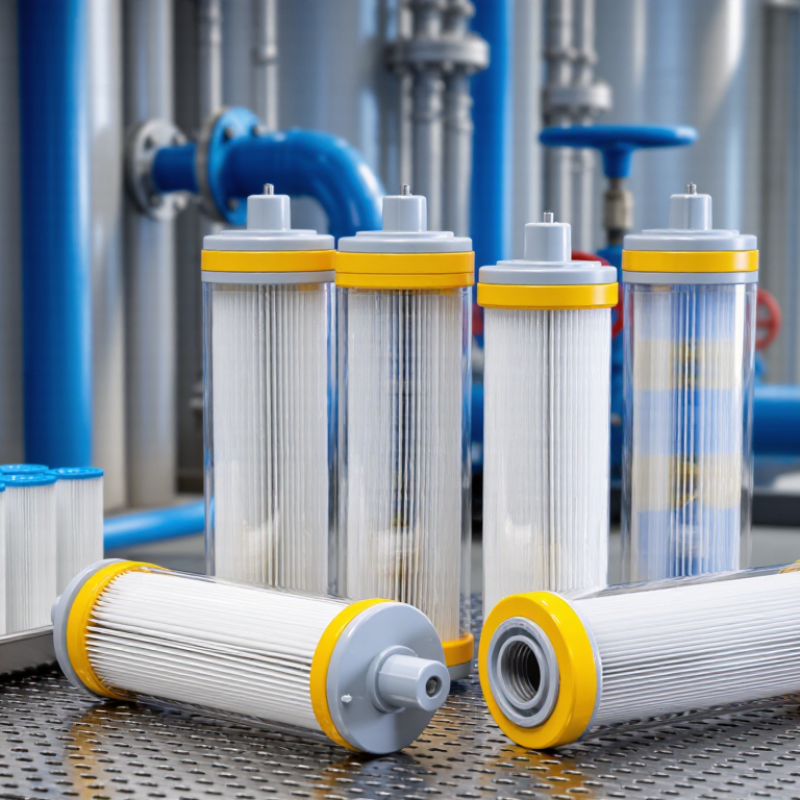
High-Flow Filter Cartridge Basics: 0.2–100 μm Ratings and Key Terms
For global buyers, high-flow filter cartridges begin with the micron rating. Ratings from 0.2 to 100 μm cover very different filtration needs. A 0.2 μm cartridge targets much smaller particles than a 100 μm prefilter. Yet the number alone is not a buying decision. Micron size describes retention, not guaranteed flow, service life, or product safety. Ask whether the rating is nominal or absolute. Nominal ratings indicate approximate removal under stated conditions. Absolute ratings usually reflect a defined test condition and stated capture efficiency.
Key terms deserve careful reading. Flow rate is often stated in liters per minute, but water-like fluids differ from oils or syrups. Differential pressure is the pressure before and after the cartridge. A rising value signals loading. Dirt-holding capacity estimates how much contaminant the media can retain before replacement. Temperature, viscosity, particle shape, and housing design can change real performance. Small details matter.
During selection, compare required flow with the clean-pressure-drop curve, not a headline capacity. Check connection size, seal material, operating temperature, and chemical compatibility. For sensitive liquid processing, a 0.2 μm claim should include a validated test method. It does not automatically prove sterile filtration. That distinction is often missed. A practical trial with the actual liquid can reveal channeling, early clogging, or an uncomfortable pressure spike. No catalog table replaces that evidence. Buyers should request batch traceability and clear replacement criteria. Vague ratings deserve caution, even when the price looks attractive.
2026 Best High Flow Filter Cartridges for Global Buyers - High-Flow Filter Cartridge Basics: 0.2–100 µm Ratings and Key Terms
| Filter Rating | Rating Type | Typical Contaminant Control | Common Applications | Typical Filter Media | Typical Clean-Water Flow Range* | Recommended Use | Important Buying Consideration |
|---|---|---|---|---|---|---|---|
| 0.2 µm | Absolute or validated retention rating | Very fine particles and many bacteria-sized contaminants; performance depends on validation and operating conditions. | Final process-water filtration, beverage clarification, laboratory water, and sensitive manufacturing processes. | Polyethersulfone, polypropylene membrane, or other fine membrane media. | Approximately 2–15 L/min per 10-inch cartridge | High-purity and final-stage filtration. | Confirm sterilizing-grade claims, bacterial retention data, integrity-test method, and compatibility with the process fluid. |
| 0.45 µm | Membrane rating; may be nominal or absolute | Fine suspended solids, yeast-sized particles, and some bacteria-sized contaminants. | Laboratory fluids, beverage processing, chemical polishing, and prefiltration before finer membranes. | Polyethersulfone, PTFE, nylon, or polypropylene membrane. | Approximately 3–20 L/min per 10-inch cartridge | Fine clarification and membrane prefiltration. | Do not compare products by micron value alone; ask whether the rating is nominal, absolute, or based on a defined test method. |
| 1 µm | Nominal or absolute rating | Fine sediment, rust, scale fragments, and larger microbial particles. | Process water, food and beverage prefiltration, cooling-water protection, and chemical processing. | Polypropylene melt-blown media, pleated polypropylene, or membrane media. | Approximately 10–45 L/min per 10-inch cartridge | Fine prefiltration where moderate flow is required. | Check dirt-holding capacity and differential-pressure development, especially in water with variable solids loading. |
| 5 µm | Usually nominal; absolute options are available | Sand, silt, rust, pipe scale, and visible suspended solids. | Municipal water, well water, irrigation, food processing, and general industrial filtration. | Polypropylene, polyester, cellulose, or pleated synthetic media. | Approximately 20–90 L/min per 10-inch cartridge | General-purpose fine sediment removal. | Compare dirt-holding capacity, pressure drop, cartridge length, and the required housing flow capacity. |
| 10 µm | Usually nominal | Medium-sized suspended solids, sand, rust, and scale particles. | Water prefiltration, cooling loops, wash water, and protection of downstream equipment. | Polypropylene, polyester, nylon mesh, or pleated synthetic media. | Approximately 35–150 L/min per 10-inch cartridge | High-capacity prefiltration. | Suitable for reducing larger solids before finer cartridges, membranes, pumps, or valves. |
| 25 µm | Nominal | Coarse sand, rust flakes, scale, and larger suspended particles. | Industrial water, cooling-water systems, irrigation, and equipment protection. | Polypropylene depth media, polyester, nylon mesh, or pleated media. | Approximately 60–250 L/min per 10-inch cartridge | High-flow coarse prefiltration. | Useful when the main objective is to protect downstream components rather than produce fine-quality water. |
| 50 µm | Nominal or mesh-equivalent rating | Large sand particles, fibers, rust flakes, and coarse debris. | Raw-water intake, irrigation, cooling towers, industrial wash water, and prefiltration. | Polypropylene depth media, polyester, stainless-steel mesh, or nylon mesh. | Approximately 100–400 L/min per 10-inch equivalent | High-flow protection for pumps and process equipment. | Confirm whether the stated rating refers to a pore size, particle-size distribution, or mesh-equivalent value. |
| 75 µm | Nominal or mesh-equivalent rating | Coarse particles, fibers, flakes, and larger debris. | Industrial water intake, irrigation, cooling systems, and prefiltration before automatic filters. | Polyester, polypropylene, nylon mesh, or stainless-steel mesh. | Approximately 130–500 L/min per 10-inch equivalent | High-throughput coarse particle removal. | Choose a washable or replaceable design according to solids loading, cleaning practice, and operating labor. |
| 100 µm | Nominal or mesh-equivalent rating | Large debris, coarse sand, leaves, fibers, and visible particulate matter. | Raw-water screening, irrigation, cooling-water protection, and first-stage industrial filtration. | Polyester mesh, nylon mesh, polypropylene depth media, or stainless-steel mesh. | Approximately 180–650 L/min per 10-inch equivalent | Very high-flow coarse prefiltration. | For heavy solids loading, consider a larger-diameter cartridge, multiple cartridges, or a self-cleaning filtration system. |
| Key Term | Meaning | Why It Matters to Global Buyers | Practical Selection Check |
|---|---|---|---|
| Micron (µm) | One micrometre, equal to one-millionth of a metre. | Provides a particle-size reference, but it does not independently describe the complete filtration performance. | Request the test standard, particle challenge material, and stated efficiency. |
| Nominal Rating | An approximate rating indicating that the filter removes a stated percentage of particles at or above a specified size under defined conditions. | Nominal ratings from different suppliers may not be directly comparable. | Ask for the removal percentage and test conditions, not only the micron number. |
| Absolute Rating | A tighter retention specification, normally supported by a defined test method and a stated maximum passage or retention level. | Important when downstream equipment or product quality requires more predictable particle retention. | Verify the test method, challenge particle, efficiency level, and whether the rating is validated. |
| High-Flow Cartridge | A cartridge designed to provide higher flow per element than a conventional small-diameter cartridge, often through greater media area or a larger format. | Can reduce the number of elements, housing size, installation space, and replacement labor. | Compare flow at the same micron rating and pressure-drop limit, rather than comparing advertised maximum flow only. |
| Dirt-Holding Capacity | The mass of contaminant a filter can retain before reaching a specified terminal differential pressure. | A higher capacity can extend service life and reduce cartridge-change frequency. | Request capacity data using a relevant contaminant and test protocol. |
| Differential Pressure | The pressure difference between the upstream and downstream sides of the cartridge. | It indicates loading and affects flow, energy use, and cartridge replacement timing. | Define clean pressure drop, normal operating pressure drop, and maximum recommended differential pressure. |
| Pressure Drop | The loss of pressure caused by fluid passing through the clean or loaded filter. | Lower pressure drop generally supports higher flow and lower pump energy demand. | Compare pressure-drop curves at the actual fluid viscosity, temperature, and target flow. |
| Pleated Media | Filter media folded into pleats to increase the available filtration area within a compact cartridge. | Often provides higher flow and dirt-holding capacity than an equivalent flat-media area. | Check pleat stability, effective area, end-cap construction, and compatibility with the housing. |
| Depth Filtration | A filtration mechanism in which particles are captured throughout the thickness of a porous media structure. | Depth media can offer substantial dirt-holding capacity for fluids with a broad particle-size distribution. | Review media construction, particle-loading behavior, extractables, and disposal requirements. |
| Surface Filtration | A filtration mechanism in which particles are primarily retained on the surface or at a defined pore structure. | Can provide more defined particle retention and may be easier to clean when a reusable mesh is used. | Confirm whether the element is disposable, cleanable, or suitable for reverse-flow cleaning. |
| Compatibility | The ability of the filter media, seals, adhesive, core, and end caps to withstand the process fluid and operating conditions. | Incompatibility may cause swelling, embrittlement, extractables, leakage, or media failure. | Check pH range, solvent resistance, temperature, sterilization method, and seal material. |
| Cartridge Length | The nominal element length, commonly specified in 10-inch increments or by an equivalent metric dimension. | Determines housing fit, available media area, flow capacity, and replacement compatibility. | Confirm actual length, outside diameter, inside diameter, end-cap configuration, and connection type. |
| End Connection | The interface between the cartridge and the housing, such as open ends, flat gaskets, fin ends, or a proprietary adapter. | A correct micron rating is unusable if the cartridge does not seal properly in the existing housing. | Match the connection geometry, gasket position, sealing material, and installation orientation. |
| Service Life | The operating period before the cartridge reaches its replacement differential pressure, flow limit, or quality limit. | Service life affects total cost, maintenance planning, inventory, and process uptime. | Base estimates on actual solids loading, flow profile, operating hours, and replacement criteria. |